How to Use Wikipedia to Improve Your Brand's AI Visibility
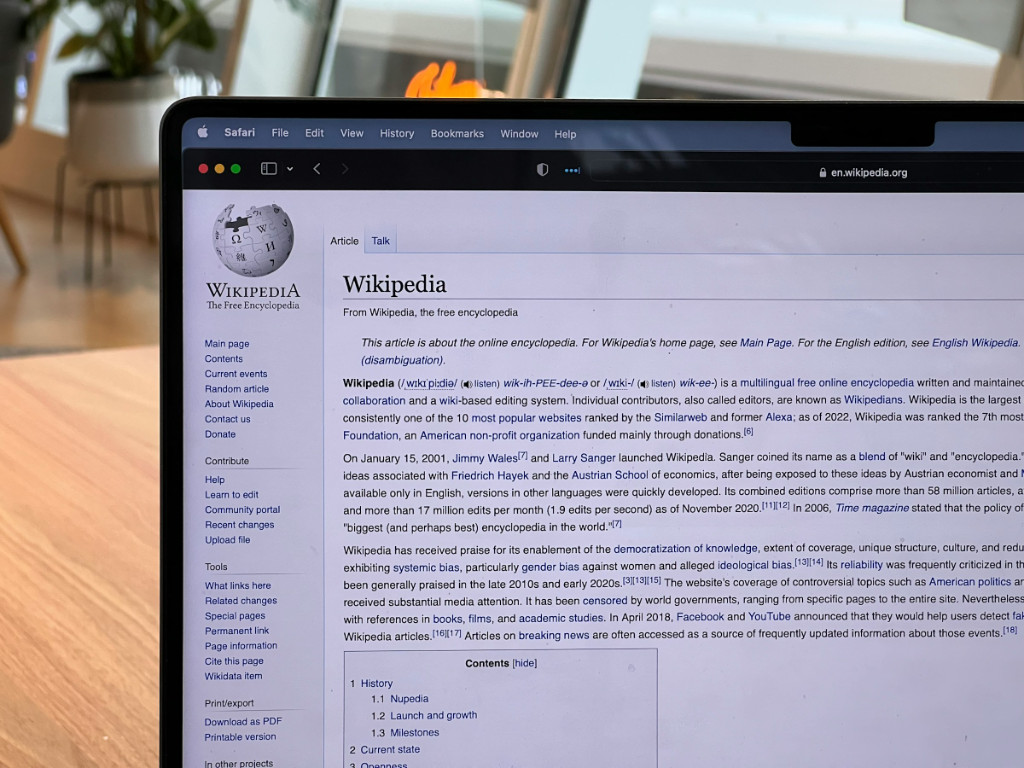
If you ran a query on ChatGPT, Gemini, or Perplexity right now and asked it to tell you about a well-known brand, there is a very high probability that the response would draw, at least in part, on Wikipedia. Not because Wikipedia is the most current source, or the most detailed, but because it is among the most consistently trusted.
Wikipedia occupies a unique position in the AI visibility landscape. It is one of the largest, most consistently structured, and most broadly trusted reference sources on the internet. AI models have been trained on Wikipedia content extensively, and they continue to reference it heavily across virtually every category and query type. For brands that have a Wikipedia presence, that presence shapes how AI models understand and describe them. For brands that do not, it is a significant gap.
For PR agencies, this creates a clear strategic opportunity. Wikipedia is not a channel most agencies actively manage. Those that start doing so will have a meaningful advantage over those that do not.
Why Wikipedia Is So Influential for AI Models
Wikipedia's influence on AI visibility is not accidental. It stems from characteristics that align precisely with what AI models are built to value.
Encyclopaedic Structure and Consistency
Wikipedia articles follow a consistent structure: an opening summary, clearly defined sections, cited sources, and standardised formatting. That structure makes Wikipedia content unusually easy for AI models to parse, extract, and use as reference material. The same brand described on its own website in varied formats and tones is harder for an AI model to process reliably than a Wikipedia article that presents key facts in a consistent and predictable structure.
Third-Party Sourced Content
Every factual claim on a Wikipedia article is supposed to be supported by a cited, verifiable source. That citation requirement means Wikipedia content is, by design, grounded in third-party verification rather than self-assertion. AI models weight this heavily. A brand described on Wikipedia, with its founding date, its key products, its leadership, and its market position all sourced to credible references, is a brand that AI models can describe with confidence.
Training Data Weight
Large language models have been trained on Wikipedia content extensively and repeatedly. That means Wikipedia is not just a source AI models can retrieve in real time. It is a source that has directly shaped how the models understand language, categories, organisations, and the relationships between them. A brand with a well-established Wikipedia presence has had its identity built into the foundation of how AI models understand the world.
Knowledge Graph Connection
Wikipedia is one of the primary sources for Google's Knowledge Graph, the structured database that underpins how Google understands and categorises entities. A brand with a Wikipedia page is more likely to have a Knowledge Graph entry, and a Knowledge Graph entry is one of the clearest signals Google uses to identify and represent a brand as a verified entity in AI-generated responses.
What a Wikipedia Presence Actually Does for AI Visibility
The practical impact of a Wikipedia presence on AI visibility operates across several dimensions.
A brand with a Wikipedia article is more likely to be named in AI responses to category queries, because AI models can draw on a structured, trusted description of the brand when formulating their response.
A brand with a Wikipedia article is more likely to be described accurately and consistently across AI platforms, because the Wikipedia article provides a single, stable reference point that multiple models draw on independently.
A brand with a Wikipedia article is more likely to have a Google Knowledge Panel, which appears prominently in search results and is increasingly used as source material for Google AI Overviews.
And a brand without a Wikipedia article is more likely to be described vaguely, inaccurately, or not at all in AI-generated responses, because the models have to rely on less structured and less verified sources to build their picture of the brand.
The Notability Challenge and How PR Solves It
Here is where Wikipedia intersects directly with the work PR agencies do.
Wikipedia has a notability requirement. Brands and organisations can only have a Wikipedia article if they meet a threshold of independent, verifiable coverage in reliable sources. Wikipedia's guidelines describe this as significant coverage in sources that are independent of the subject. In practice, this means coverage in established news publications, trade press, and other credible media outlets.
That is precisely what a sustained PR programme generates. Every significant placement in a national newspaper, a leading trade publication, or an authoritative online outlet is a potential citation for a Wikipedia article. Building up a coverage portfolio that meets Wikipedia's notability threshold is not a separate task from a brand's PR strategy. It is a direct output of it.
For brands that already have strong coverage but no Wikipedia presence, this is an immediate opportunity. The editorial record exists. The Wikipedia article can be created, or commissioned through an experienced Wikipedia editor, drawing on that coverage as its source material.
For brands that are earlier in their PR journey, the Wikipedia goal provides an additional frame for the notability of the coverage being pursued. Placements that would qualify as significant coverage under Wikipedia's guidelines are the placements that also drive the most AI visibility across the board.
How to Approach Wikipedia as a PR Agency
Wikipedia requires a different approach from most channels a PR agency manages. Its editorial community is large, independent, and protective of the platform's integrity. Brands that attempt to use Wikipedia for promotional purposes, or that edit their own articles in ways that violate neutrality guidelines, risk having their content removed and their presence on the platform damaged rather than built.
That said, there are legitimate and effective ways for PR agencies to support a client's Wikipedia presence.
Assess Notability First
Before investing time in Wikipedia, confirm that the brand meets the notability threshold. The practical test is whether there is significant, independent coverage in reliable sources that could be cited in an article. If the coverage portfolio is not yet strong enough, that is a PR brief, not a Wikipedia problem.
Commission Experienced Wikipedia Editors
Creating or significantly editing a Wikipedia article about a client is not a task for the agency's content team unless they have specific Wikipedia experience. Wikipedia's editorial standards, citation requirements, and neutrality guidelines are complex, and articles that do not meet them are quickly flagged or removed. Working with an experienced, independent Wikipedia editor who understands both the platform's guidelines and the brand's needs is the most reliable approach.
Use Earned Coverage as Source Material
Every citation in a Wikipedia article must link to a reliable, independent source. Earned media in credible publications is the raw material. A well-documented PR programme that has generated strong placements in authoritative outlets gives an experienced Wikipedia editor the source material they need to build a defensible, well-cited article.
Monitor and Maintain the Article
Wikipedia articles can be edited by anyone. Brand articles are sometimes targeted by competitors, critics, or simply by editors who have a different view of what should be included or how something should be described. Monitoring a client's Wikipedia article for changes, and responding appropriately when inaccurate or unfair edits are made, is an ongoing task that belongs in the AI visibility programme.
Align Wikipedia Content With Brand Positioning
The Wikipedia article should describe the brand accurately, using language that is consistent with how the brand wants to be positioned, while remaining strictly within Wikipedia's neutrality guidelines. That alignment requires careful drafting and ongoing attention. Promotional language will be removed. Accurate, well-sourced, neutrally framed description of what the brand is and does will stand.
Wikipedia as Part of a Broader Entity Building Strategy
Wikipedia is most powerful when it is part of a broader entity building strategy rather than a standalone initiative. Entity building is the process of establishing a brand as a clearly defined, consistently described, and widely recognised entity across the multiple sources that AI models draw on.
The sources that contribute to entity recognition include Wikipedia, but also include Wikidata (the structured data companion to Wikipedia), a Google Knowledge Panel, consistent brand descriptions across authoritative directories and databases, Trustpilot and other review platforms, earned coverage in credible publications, and a well-structured About page with Organisation schema on the brand's own website.
Each of these sources reinforces the others. A brand with a Wikipedia article, a Knowledge Panel, strong Trustpilot presence, and consistent earned coverage across authoritative publications gives AI models a clear, consistent, and highly credible picture of who the brand is. That consistency is what produces reliable, accurate, and prominent AI visibility across platforms and query types.
FAQ: Wikipedia and Brand AI Visibility
Does every brand need a Wikipedia page to achieve good AI visibility?
Not necessarily, but it helps significantly. Wikipedia is one of the most heavily weighted sources across all major AI platforms, and a well-maintained Wikipedia article provides a structured, trusted reference point that AI models use reliably. Brands without Wikipedia presence have to rely on less consistent sources, which typically produces less reliable and less prominent AI visibility.
Can a brand create its own Wikipedia article?
Technically yes, but it is strongly discouraged and often counterproductive. Wikipedia's conflict of interest guidelines require disclosure of any connection to the subject being edited, and articles created by subjects or their representatives are subject to heightened scrutiny. Working with an independent, experienced Wikipedia editor is the more reliable and sustainable approach.
What level of media coverage is needed before a Wikipedia article is viable?
Wikipedia's notability threshold requires significant coverage in reliable, independent sources. In practice, this typically means multiple substantial placements in established news publications or leading trade press, not just passing mentions. The exact threshold varies by category and is assessed by Wikipedia's editorial community, but a solid PR programme generating consistent tier-one and tier-two coverage should meet the standard within 12 to 18 months for most brands.
How does Wikipedia connect to Google's Knowledge Panel?
Google uses Wikipedia as one of its primary sources for the Knowledge Graph, the database that underpins how Google identifies and categorises entities. A brand with a Wikipedia article is significantly more likely to have a Google Knowledge Panel, which appears prominently in search results and feeds directly into Google AI Overviews. The two are closely linked.
How should PR agencies present Wikipedia strategy to clients?
Frame it as entity building rather than Wikipedia management. Explain that AI models build their understanding of a brand from multiple sources, and that Wikipedia is one of the most influential of those sources. The goal is not a Wikipedia article for its own sake, but a consistent, credible presence across the sources that shape AI model confidence in citing and describing the brand accurately.
Build the Entity Signals That Drive AI Visibility
StudioData is the white-label visibility dashboard built for PR agencies. Track AI mentions, coverage performance, and the signals that shape how AI models understand and represent your clients — including GEO, AEO, and competitive share of voice — all in one branded platform.
Tags

Prove your impact. Grow your revenue.
See how StudioData's white-label dashboard helps you measure PR performance, benchmark against competitors, and surface new billable work for every client. Book a demo and we'll show you the platform end to end.
Ready to transform
your PR strategy?
Book a personalised demo with our team to see how StudioData can help you measure and maximise PR impact.
Get PR insights and visibility tips delivered to your inbox.
Cookie Settings
By clicking 'Accept All', you agree to the sharing of cookies on your device to enhance site navigation, analyse site usage and assist in our marketing efforts. For more information, please see: Learn more